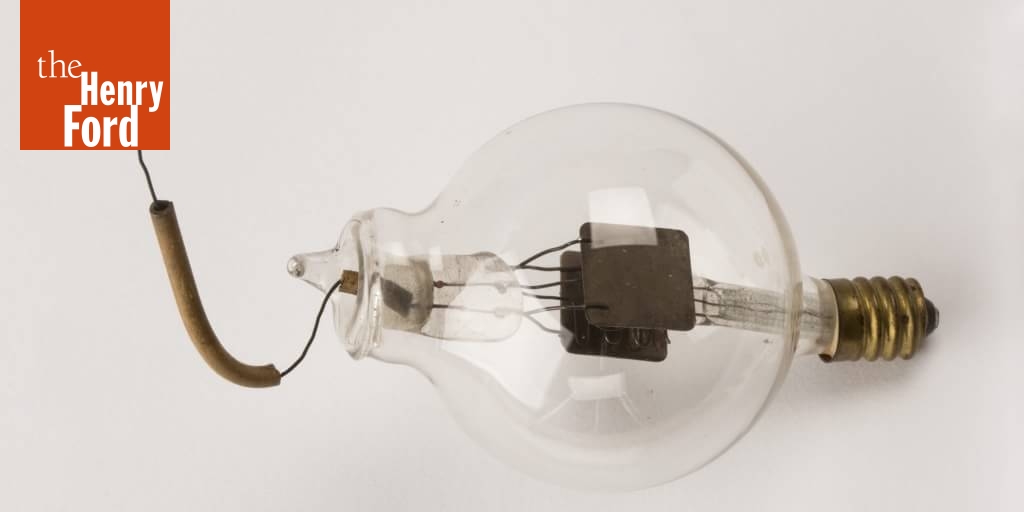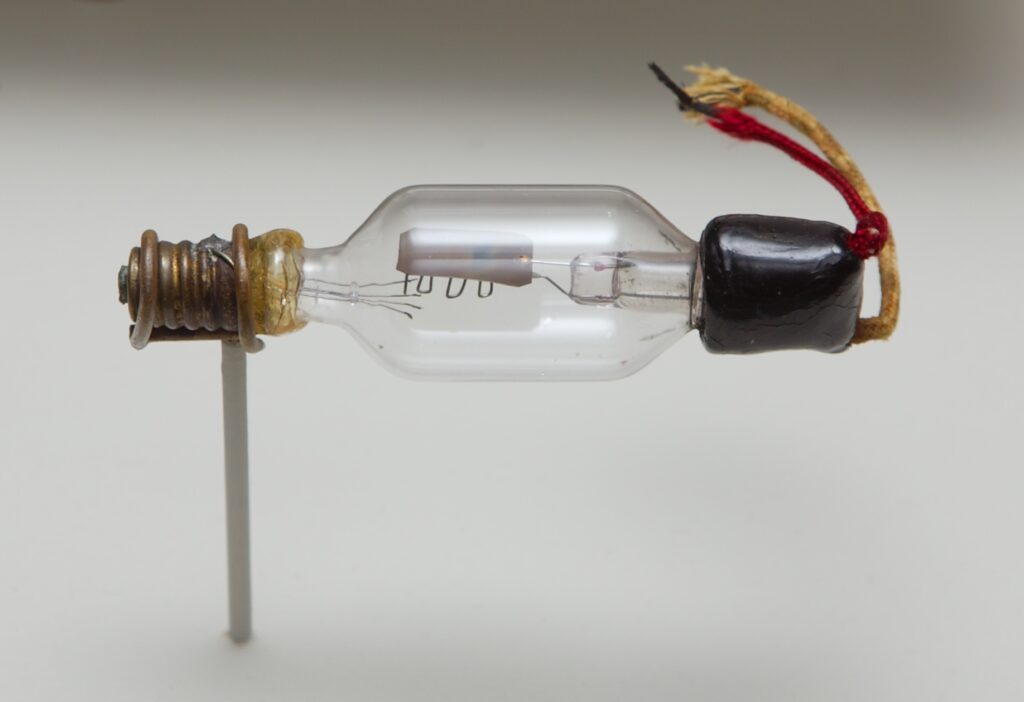
The Logo of the Lee de Forest Amateur Radio Club, has a line drawing of the Audion Vacuum tube that was invented by Lee, way back in 1908. This led to the ability to amplify weak signals, and transmit voice, over radio.

Key features and components of the Audion Vacuum tube
Three electrodes: The Audion contained a heated filament (cathode), a plate (anode), and a control grid—a bent wire—placed between them.
Amplification: The grid allowed a small voltage to control a much larger current flowing between the filament and the plate, making it the first electronic device that could amplify a signal.
Rectification: It also acted as a rectifier, converting alternating current (AC) to direct current (
DC).
Impact and legacy
- Radio: It made radio broadcasting more practical by allowing for the detection and amplification of weaker signals, leading to widespread home radios by the late 1920s.
- Telephony: It was crucial for the development of long-distance telephone service, enabling AT&T to set up coast-to-coast phone lines.
- Electronics: The Audion was a foundational technology in early electronics. While the generic term “Audion” eventually fell out of use as more complex tubes were developed, its function as the first amplifying vacuum tube paved the way for future innovations, including the transistor.